Accountability That Doesn’t Trigger Avoidance
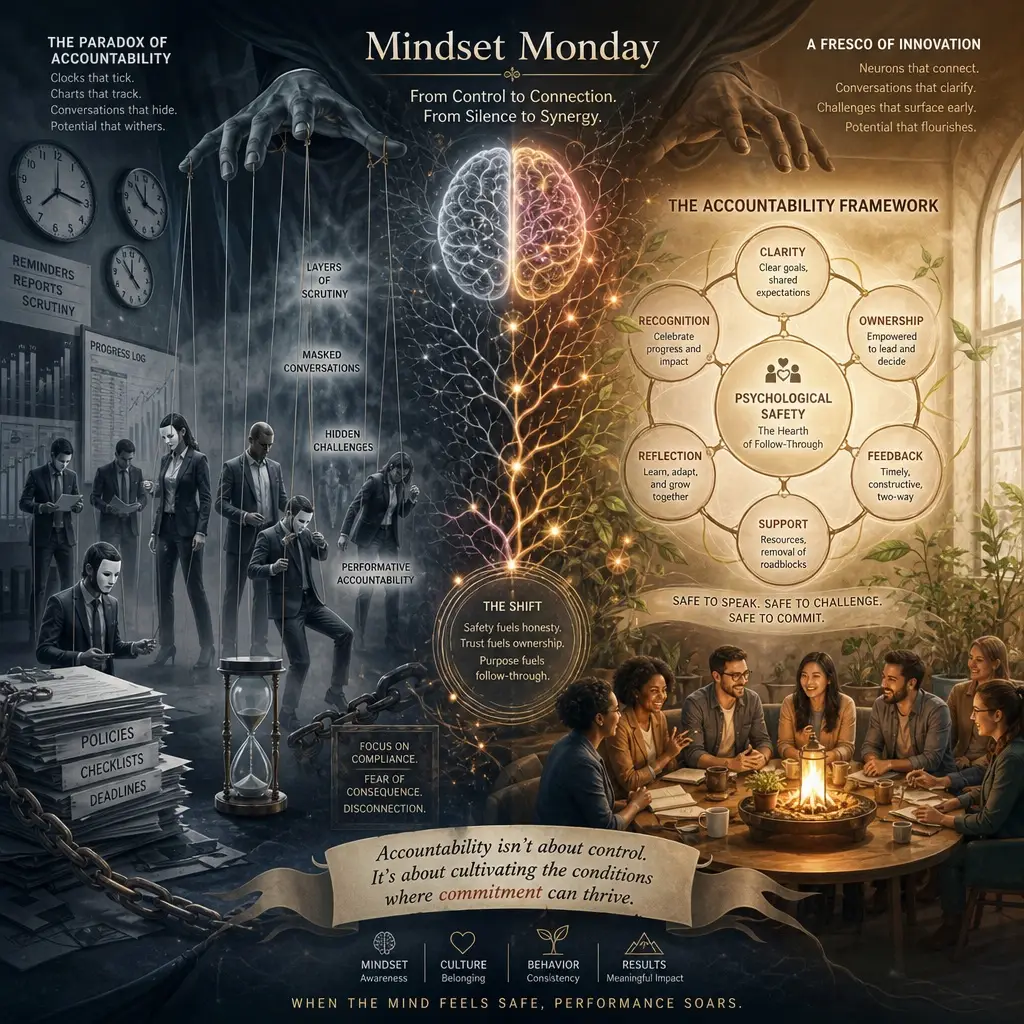
Most leaders want the same thing: a team that follows through.

So we push for “ownership.” We ask, “Who owns this?” We add more tracking. More reminders. More pressure.

And then something predictable happens.

People get quieter. Updates get vaguer. Problems surface later. Accountability turns into a game of looking busy.

That’s not a character flaw.

It’s a brain response.

This Mindset Monday is about building accountability that doesn’t trigger avoidance—a neuroscience-informed system that creates follow-through and psychological safety.

Stop Losing September: Rebuild Momentum in 72 Hours

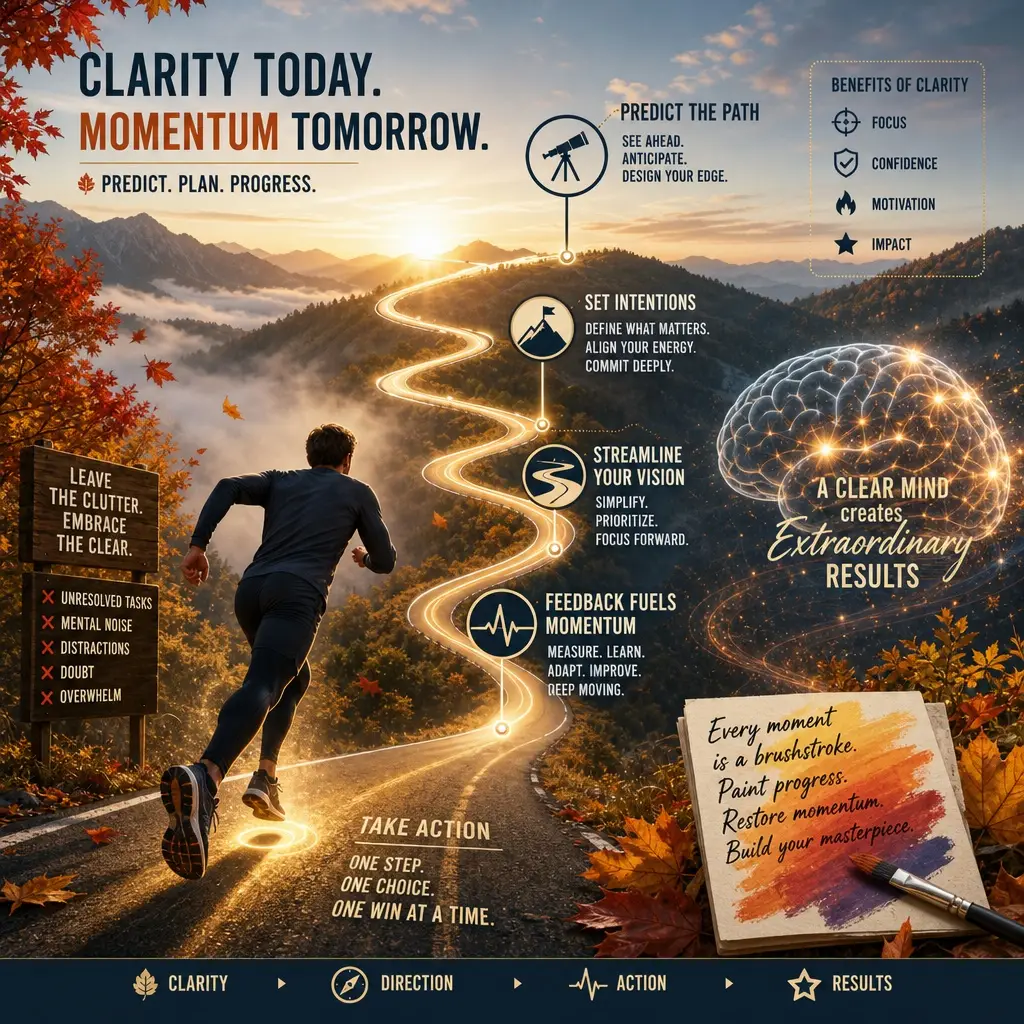
a person climbing a mountain with clarity of goals one step at a time.

Back from summer, most leaders try to restart momentum by pushing harder. But your brain doesn’t rebuild momentum through pressure—it rebuilds it through prediction: clear goals, fewer open loops, and fast feedback.

Rest isn’t the absence of work—it’s a trained capability

IronMind Leadership & Performance - Mindfulness

You can’t out-discipline a nervous system that never downshifts.

Restfulness is not passive. It’s the ability to shift from sympathetic drive to parasympathetic recovery on purpose.

High performers often have the drive skill—but not the downshift skill. That’s why vacations don’t always fix burnout: your body goes away, but your nervous system stays “on.”

Mindfulness That Doesn’t Feel Like Another Task

IronMind Leadership - Breath Rest Lead

Micro-mindfulness for leaders: regulate in real time, not in theory

If mindfulness feels like homework, it won’t stick. The goal isn’t calm. The goal is state control.

The most useful mindfulness practice for leaders isn’t a 30-minute routine you’ll “start someday.” It’s a micro-reset embedded into the day you already have.

The Certainty Trap: Why Leaders Freeze When They Don’t Have Enough Information

IronMind Leadership & Performance: Mindset Monday Blog Post.

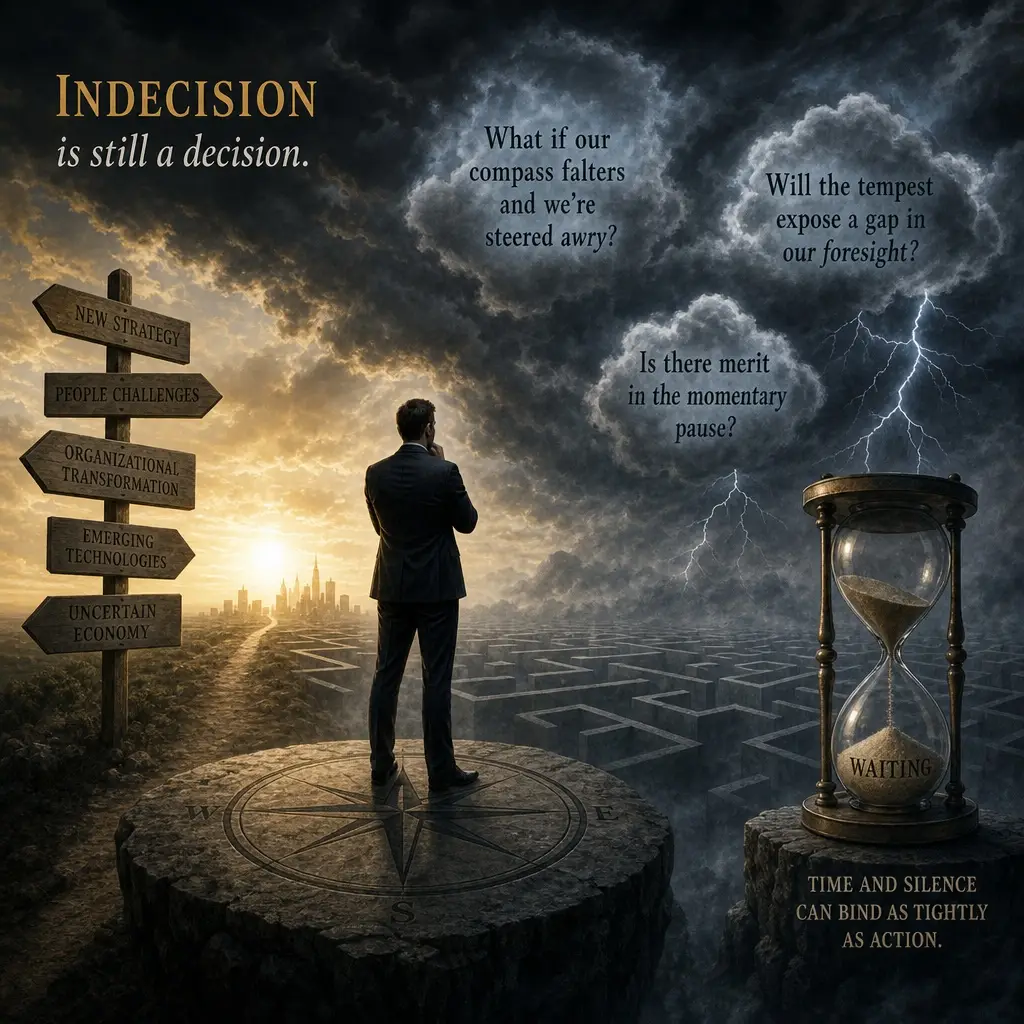
Modern leadership doesn’t reward certainty.

It rewards adaptability.

Yet many leaders find themselves delaying decisions while waiting for perfect information that never arrives.

A new initiative.
A staffing challenge.
An organizational change.
An emerging technology.
An uncertain economy.

The questions pile up.

“What if we’re wrong?”

“What if we miss something?”

“What if we wait a little longer?”

Unfortunately, waiting has become a decision in itself.

The Attention Crisis: Why Smart Leaders Are Becoming Reactive Instead of Strategic

IronMind - Leadership in Action Blog Post

Most leaders don’t have a time management problem.

They have an attention management problem.

The modern leader operates in an environment of constant interruption—emails, Teams messages, text notifications, meetings, AI-generated information, competing priorities, and organizational noise. Every interruption seems small in isolation, but collectively they create a dangerous leadership challenge.

Leading Beyond the Role: How Purpose Expands Influence at Every Level

Mountain,Ridge,+,A,Luminous,Bridge/path,Connecting,People,At,Different

Leadership isn’t a title. It’s a choice—made in the moments where you decide to act with intention, not just react to circumstances.

If you’ve ever thought, “I’ll have more influence when I’m promoted,” this is your reminder: influence doesn’t start with authority. It starts with purpose.

In IronMind terms, purpose is the internal compass that helps you lead with clarity, courage, and consistency—no matter where you sit on the org chart.

From Intention to Influence: How Purposeful Messaging Creates Real Impact

mountains in the background, compass in the foreground with sun light being shone on the compass to provide direction.

Purpose does not create impact simply because it exists. It creates impact when leaders communicate it clearly, consistently, and credibly. Teams do not align around vague intention. They align around messages they can understand, trust, and apply.

This is why Purposeful Messaging is such a critical leadership competency. It helps leaders translate values into language, stories, and standards that people can remember and act on. As John C. Maxwell said, “People buy into the leader before they buy into the vision.” Credibility shapes whether purpose lands at all.

Purpose Is Not a Slogan: How Leaders Turn Values Into Daily Action

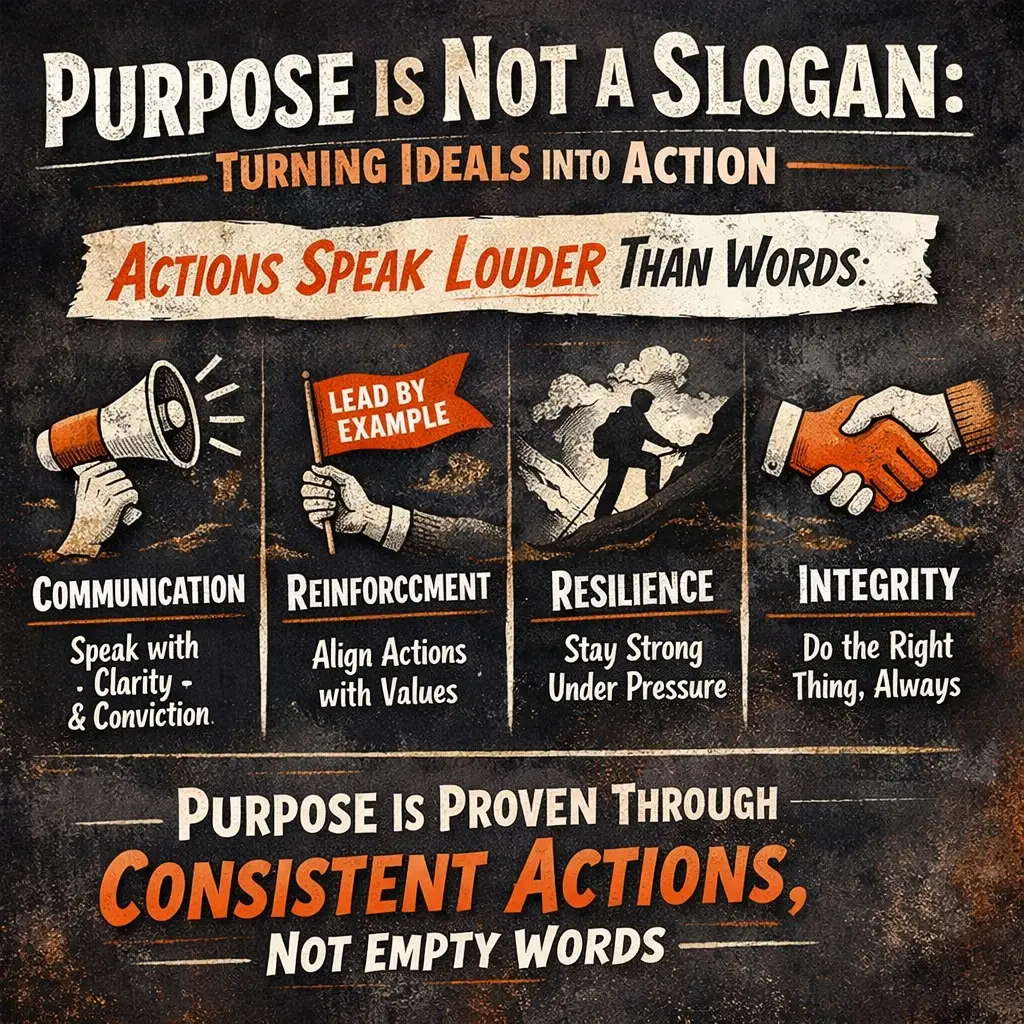
Purpose is easy to admire when it is framed well, printed beautifully, and repeated often. It is much harder to live.

In many organizations, purpose is treated like a positioning statement: something designed to inspire, unify, or differentiate. But leadership exposes whether purpose is truly operational or merely aspirational. Teams do not judge purpose by the elegance of its language. They judge it by the consistency of leadership behavior.