Accountability That Doesn’t Trigger Avoidance
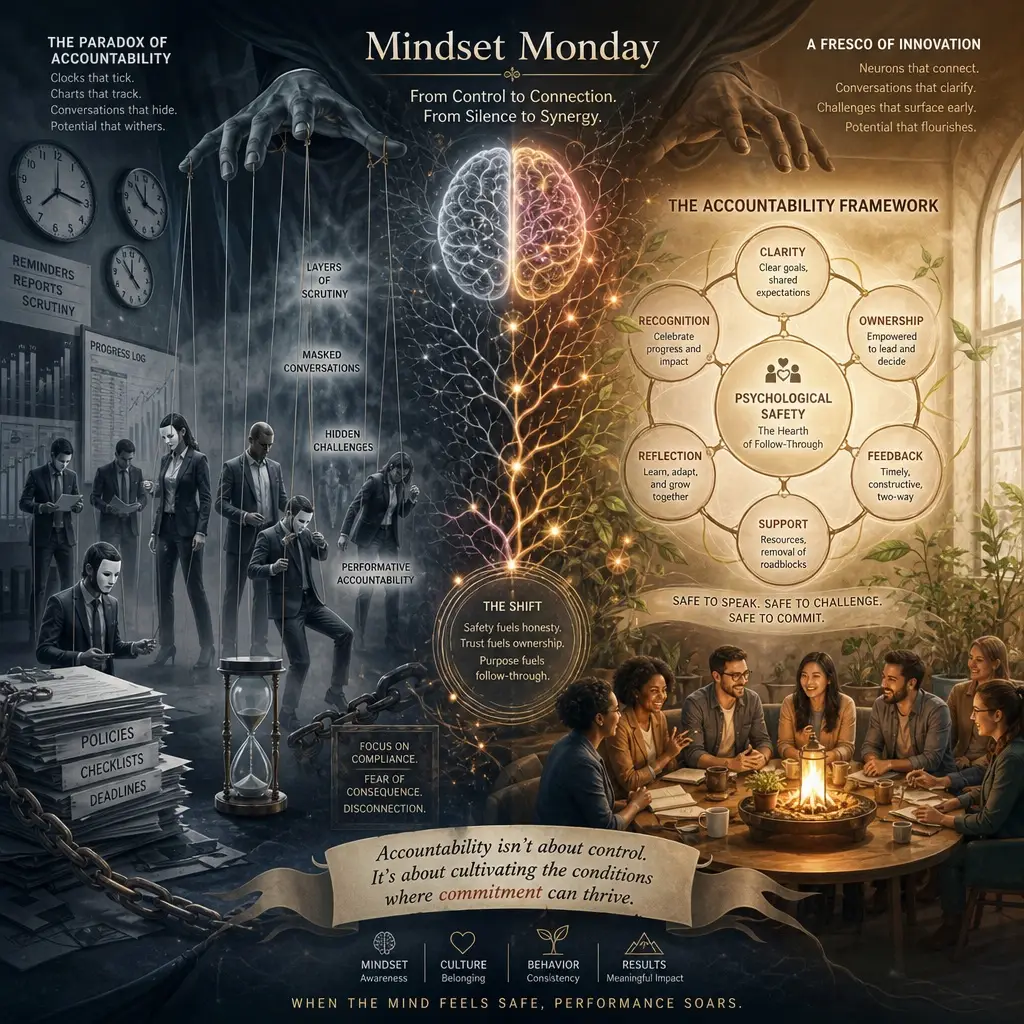
Most leaders want the same thing: a team that follows through.

So we push for “ownership.” We ask, “Who owns this?” We add more tracking. More reminders. More pressure.

And then something predictable happens.

People get quieter. Updates get vaguer. Problems surface later. Accountability turns into a game of looking busy.

That’s not a character flaw.

It’s a brain response.

This Mindset Monday is about building accountability that doesn’t trigger avoidance—a neuroscience-informed system that creates follow-through and psychological safety.
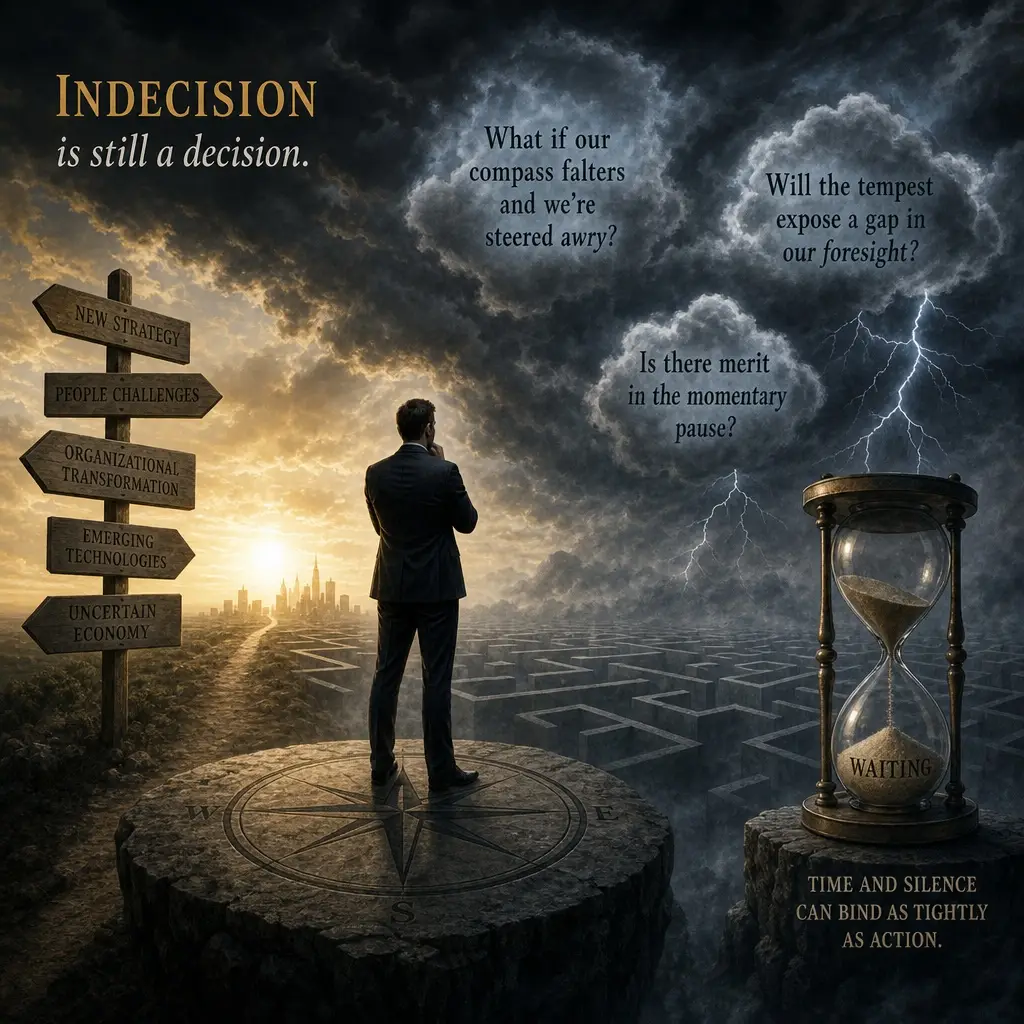
The Certainty Trap: Why Leaders Freeze When They Don’t Have Enough Information

IronMind Leadership & Performance: Mindset Monday Blog Post.

Modern leadership doesn’t reward certainty.

It rewards adaptability.

Yet many leaders find themselves delaying decisions while waiting for perfect information that never arrives.

A new initiative.
A staffing challenge.
An organizational change.
An emerging technology.
An uncertain economy.

The questions pile up.

“What if we’re wrong?”

“What if we miss something?”

“What if we wait a little longer?”

Unfortunately, waiting has become a decision in itself.

The Attention Crisis: Why Smart Leaders Are Becoming Reactive Instead of Strategic

IronMind - Leadership in Action Blog Post

Most leaders don’t have a time management problem.

They have an attention management problem.

The modern leader operates in an environment of constant interruption—emails, Teams messages, text notifications, meetings, AI-generated information, competing priorities, and organizational noise. Every interruption seems small in isolation, but collectively they create a dangerous leadership challenge.

The Five-Pillar Spine Mid-Year Re-commitment: A Leadership Operating System for the Next Two Quarters

Mid-year is when most leaders do one of two things:

Recommit to goals (often the same ones, with more pressure)

Quietly drift (because the year got loud)

But there’s a third option—and it’s the boundary-push:

Stop treating the next six months like a goal chase. Start treating it like an operating system.

Goals tell you what you want.

An operating system tells you how you’ll lead when you’re tired, busy, triggered, or uncertain.

That’s what the Five-Pillar Spine is for.

Not as inspiration.

As constraints that create freedom.

The 9-Competency Scorecard Reset: Stop Chasing Balance Start Designing Strategic Imbalance

Leadership growth doesn’t come from balance. It comes from leverage.

In the next six months, the leaders who make the biggest jump wont be the ones who try to improve all nine competencies at once.

They’ll be the ones who choose a purposeful focus a strategic imbalance and let that one shift create second-order gains everywhere else.

Your Leadership Flywheel Checkpoint: Where Momentum Is Leaking (and How to Rebuild It in 30 Days)

A,Dynamic,Flywheel,Gleams,In,Soft,,Ambient,Light,,Slowly,Gaining Momentum

Most mid-year resets focus on motivation:

“Try harder.”

“Get disciplined.”

“Push through.”

But leadership growth doesn’t compound because you want it more. It compounds when you remove friction from the system that creates your results. That’s the boundary-push: treat leadership development like a flywheel.

A flywheel doesn’t need hype. It needs:

consistent input

low drag

enough time for momentum to build

If your momentum is stalling, it’s rarely a character flaw.

It’s usually a leak.

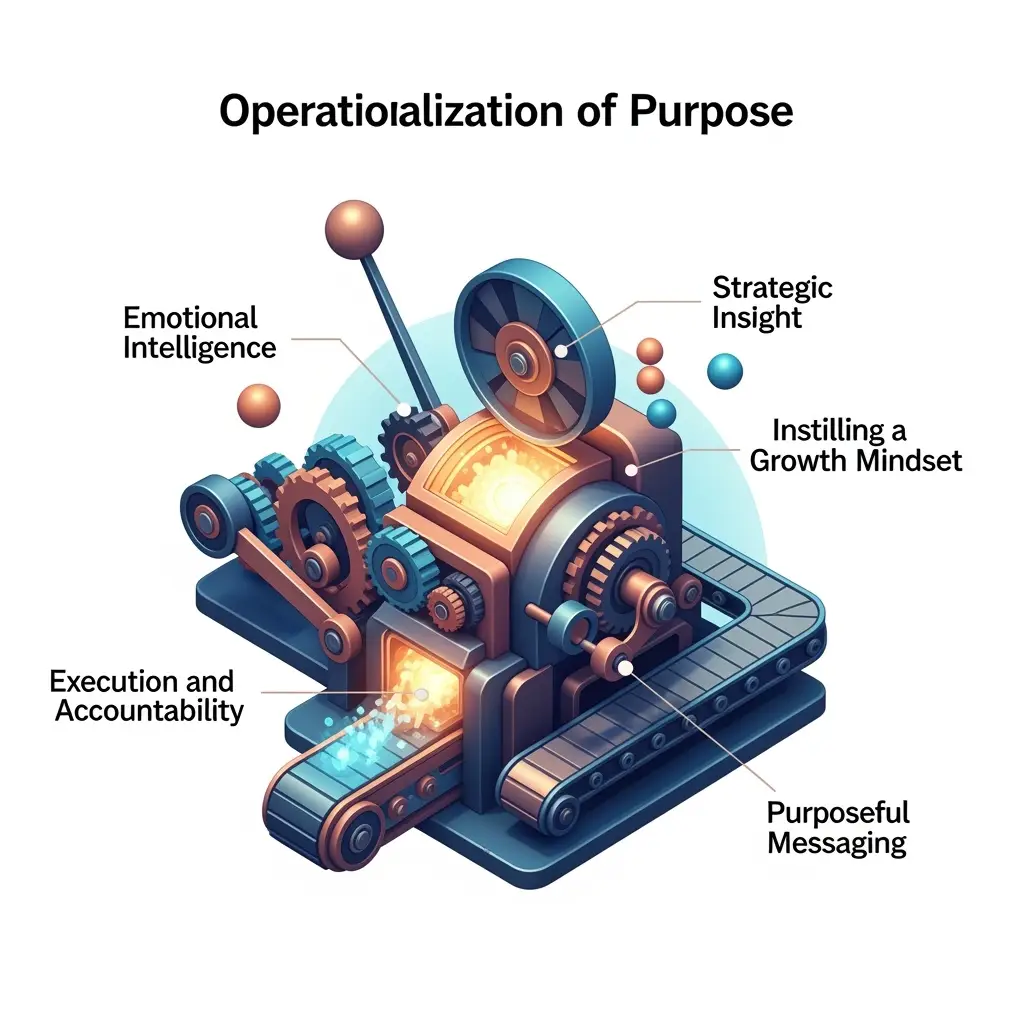
The Neuroscience of Meaningful Leadership: Why Purpose Fuels Performance

Purpose is often described as inspiration. In practice, it is much more than that. Purpose gives leaders a stable internal compass when demands compete, pressure rises, and decisions carry real consequences. It helps people make sense of effort, stay connected to what matters, and continue moving forward with intention.

As Friedrich Nietzsche wrote, “He who has a why to live can bear almost any how.” In leadership, that insight still holds. Meaning strengthens clarity, commitment, and performance under pressure.

Resolutions That Last – Community and Accountability

Celebration - Community hands in circle.

Most resolutions fail not because of lack of effort, but because we try to go it alone.

Neuroscience proves that accountability and community can increase your success rate by up to 65%. When you share your goals and check in with others, your brain releases oxytocin—the trust hormone—which strengthens your commitment.

The science is clear: you don’t transform alone. You transform together.

Ready to build the habits that stick? Subscribe to Mindset Monday for weekly breakthrough thinking and actionable leadership insights delivered straight to your inbox. Start your week with the neuroscience-backed strategies that actually work.

Subscribe now and join thousands of leaders building lasting change.

Goal-Setting That Sticks – From Resolution to Reality

New Year Resolutions, Checklist with Coffee and Pen

We all know that January is prime time for resolutions—but let’s be honest, most of them don’t last. Why? Because willpower alone isn’t enough. Lasting change comes from setting goals that are clear, emotionally meaningful, and broken into achievable steps. Neuroscience shows that when our goals spark emotion, they activate the brain’s reward system, making follow-through far more likely.