Purpose is often described as inspiration. In practice, it is much more than that. Purpose gives leaders a stable internal compass when demands compete, pressure rises, and decisions carry real consequences. It helps people make sense of effort, stay connected to what matters, and continue moving forward with intention.
As Friedrich Nietzsche wrote, “He who has a why to live can bear almost any how.” In leadership, that insight still holds. Meaning strengthens clarity, commitment, and performance under pressure.
Purpose Is Not Soft. It Is Strategic.
When leaders are grounded in purpose, they are better able to direct attention, regulate emotion, and sustain effort over time. Purpose reduces noise. It helps leaders distinguish what is urgent from what is important and what is merely reactive from what is truly aligned.
This is where Strategic Insight becomes visible. Purpose supports better judgment because it gives leaders a filter for decision-making. Instead of being pulled in every direction, they can ask: What serves the mission, the people, and the long-term outcome?
Purpose also strengthens Emotional Intelligence. Leaders with a clear sense of meaning are often more capable of staying steady in difficult moments. They can notice their triggers, manage their reactions, and respond in ways that preserve trust and standards. Purpose does not remove pressure, but it helps leaders interpret pressure differently.
What the Brain Tells Us
Neuroscience helps explain why purpose matters so deeply. When people see meaning in their work, the brain is more likely to engage systems related to motivation, reward, and sustained attention. Purpose can increase persistence because effort feels connected to something larger than immediate discomfort.
Research on the brain’s reward systems suggests that meaningful progress can reinforce motivation. When leaders and teams experience work as significant, they are more likely to remain engaged and resilient, even when results take time. Purpose gives the brain a reason to keep investing energy.
Purpose also supports emotional regulation. Under stress, the brain can narrow attention toward threat, speed, and self-protection. A strong sense of meaning can help interrupt that pattern by reconnecting leaders to values, perspective, and intention. In other words, purpose can create a pause between pressure and reaction.
As Viktor Frankl observed, “Those who have a ‘why’ to live, can bear with almost any ‘how.’” Purpose does not make leadership easy. It makes effort more coherent.
Purpose, Resilience, and Growth
Meaningful leadership is not only about endurance. It is also about development. Leaders who connect daily actions to a larger purpose are more likely to persist through setbacks, learn from challenge, and re-engage after disappointment. This is closely tied to Instilling a Growth Mindset.
A growth-minded leader does not see difficulty as proof of inadequacy. They see it as information, feedback, and an invitation to adapt. Purpose reinforces that mindset because it reminds leaders that growth is in service of something important. The struggle is not random. It is connected to contribution.
This combination matters in organizations. Teams are more engaged when they understand not only what they are doing, but why it matters. They are more resilient when leaders communicate meaning clearly, reinforce progress consistently, and model steadiness under pressure.
From Meaning to Measurable Impact
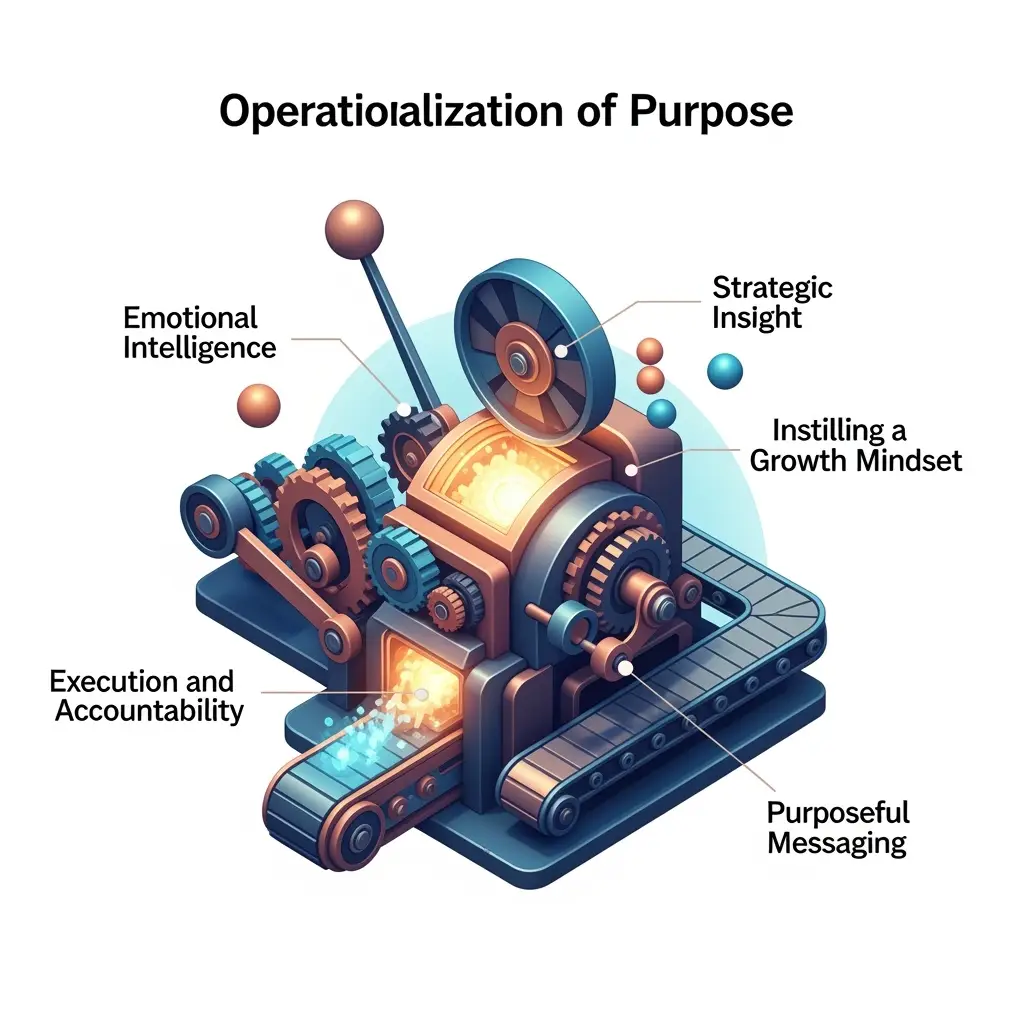
Purpose becomes powerful when it is operationalized. It must show up in how leaders communicate, what they prioritize, and the standards they reinforce. This is where competencies come alive:
- Emotional Intelligence helps leaders regulate themselves and respond with empathy and standards.
- Strategic Insight helps leaders align decisions with mission and long-term value.
- Instilling a Growth Mindset helps leaders frame challenge as development rather than defeat.
- Execution and Accountability ensure purpose is translated into action.
- Purposeful Messaging helps leaders communicate meaning in ways people can understand and follow.
When purpose is visible in behavior, it builds trust. When it is reinforced through action, it strengthens culture. When it is sustained over time, it improves performance.
A Leadership Question for May
Purpose is not a slogan. It is a discipline.
The question for leaders this month is simple: Where is your purpose visible in how you lead, especially when pressure tests your priorities?
If you want your leadership to create stronger clarity, deeper commitment, and more meaningful impact, start by making purpose practical. Translate it into habits, decisions, and conversations your team can actually see.
Call to Action
If you are ready to strengthen purposeful leadership in your organization, let’s start a conversation. Book a 30-minute introductory call to explore how IronMind Leadership & Performance helps leaders turn meaning into measurable impact.
