Can Your Team Disagree Without Coming Apart?

a leader contemplates their next move as teams debate an outcome over a round of tug-of-war

Two capable people disagree about a decision.

One sees a deadline the team cannot afford to miss. The other sees a risk the team cannot afford to ignore. Both care about the outcome. Neither feels heard.

Soon, the discussion shifts. People stop testing the idea and start questioning one another’s judgment. Others fall quiet. The meeting ends with a decision, but the tension follows everyone out of the room.

The Credibility of “I Don’t Know Yet”

Talking through times of uncertainty using a whiteboard and markers and pictures.

Your team wants an answer.

Will the project continue? Is the deadline changing? What does the new direction mean for their work?

You have some information, but the decision is not final. So you face a familiar leadership dilemma: speak with confidence you cannot justify, or admit that you do not know yet.

There is a third responsibility: give people an honest account of what is uncertain and a clear path through it.

“I don’t know yet” can be a credible answer. It cannot be the entire answer.

“My Door Is Open” Isn’t Enough: Why Teams Still Stay Silent

Leaders discuss where communication and trust went wrong around a board room table.

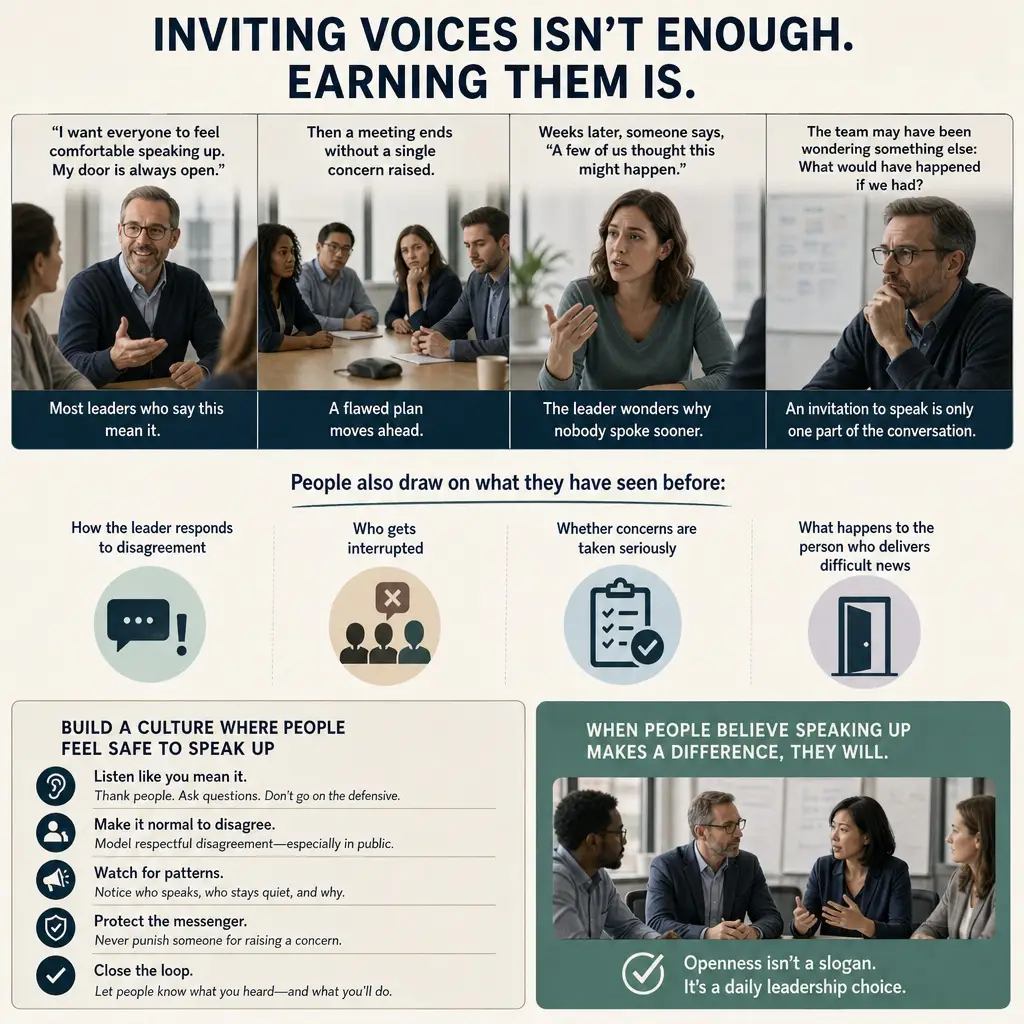
“I want everyone to feel comfortable speaking up. My door is always open.”

Most leaders who say this mean it. Then a meeting ends without a single concern raised. A flawed plan moves ahead. Weeks later, someone says, “A few of us thought this might happen.”

The leader wonders why nobody spoke sooner.

The team may have been wondering something else: What would have happened if we had?

An invitation to speak is only one part of the conversation. People also draw on what they have seen before: how the leader responds to disagreement, who gets interrupted, whether concerns are taken seriously, and what happens to the person who delivers difficult news.

When AI Writes the Message, Who Earns the Trust?

AI, Communication & Leadership, a leader contemplates the message they are about to send.

A leader has difficult news to share. A decision has changed, a deadline has slipped, or a team member’s work has fallen short.

They ask AI to help draft the message. Seconds later, the words are clear, polished, and reassuring.

But there is a question worth asking before they press send:

Does this message sound like someone who understands what people are going through—and is prepared to stand behind every word?

AI can make writing faster. It can help organize a complex update, remove unnecessary jargon, and reveal where a message may be unclear. Those are useful capabilities. Yet leadership communication carries more than information. It carries responsibility for the decision, respect for the people affected, and a commitment to what happens next.

The Trust Gap: Why Your Team Isn’t Telling You What You Need to Hear

IronMind: Mindset Monday Blog Posts

Most leaders believe communication is improving.

Meetings are happening.
Updates are being shared.
Teams are talking.

Yet beneath the surface, something very different may be happening.

Employees are becoming experts at filtering what they say.

They carefully choose which concerns to raise.
They withhold difficult feedback.
They avoid challenging assumptions.
They stay silent when they believe speaking up carries risk.

The result is one of the most dangerous blind spots in leadership:

Leaders hear what people think is safe to say—not what is actually happening.

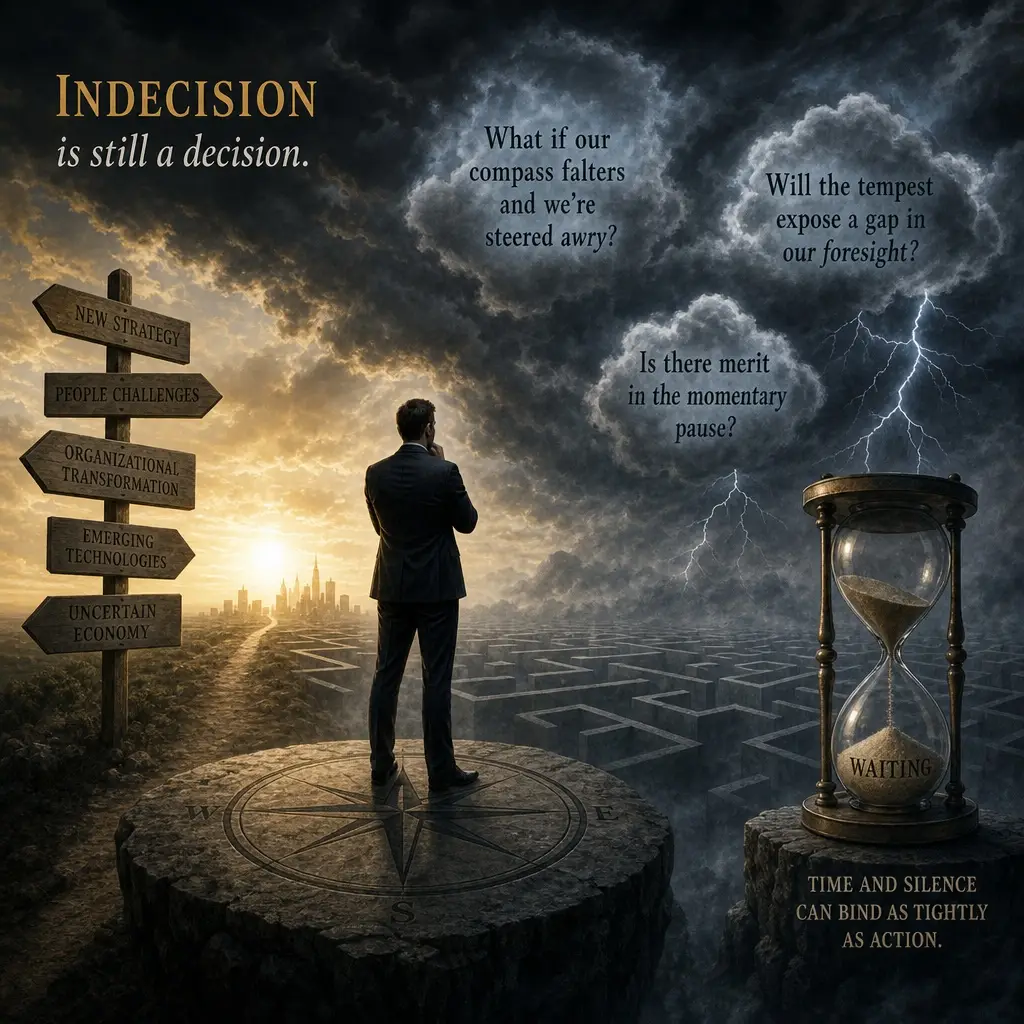
The Certainty Trap: Why Leaders Freeze When They Don’t Have Enough Information

IronMind Leadership & Performance: Mindset Monday Blog Post.

Modern leadership doesn’t reward certainty.

It rewards adaptability.

Yet many leaders find themselves delaying decisions while waiting for perfect information that never arrives.

A new initiative.
A staffing challenge.
An organizational change.
An emerging technology.
An uncertain economy.

The questions pile up.

“What if we’re wrong?”

“What if we miss something?”

“What if we wait a little longer?”

Unfortunately, waiting has become a decision in itself.

The Leadership Bottleneck: Why Your Team Keeps Bringing Every Problem Back to You

IronMind Leadership: The Leadership Bottleneck

If your team needs you to solve every problem…

You haven’t built a high-performing team.

You’ve built dependency.

Many leaders find themselves overwhelmed by constant requests, approvals, decisions, and escalations. Their calendars are full, their inboxes are overflowing, and they often feel like they’re carrying the weight of the entire organization.

Yet what if the problem isn’t workload?

What if the problem is leadership design?